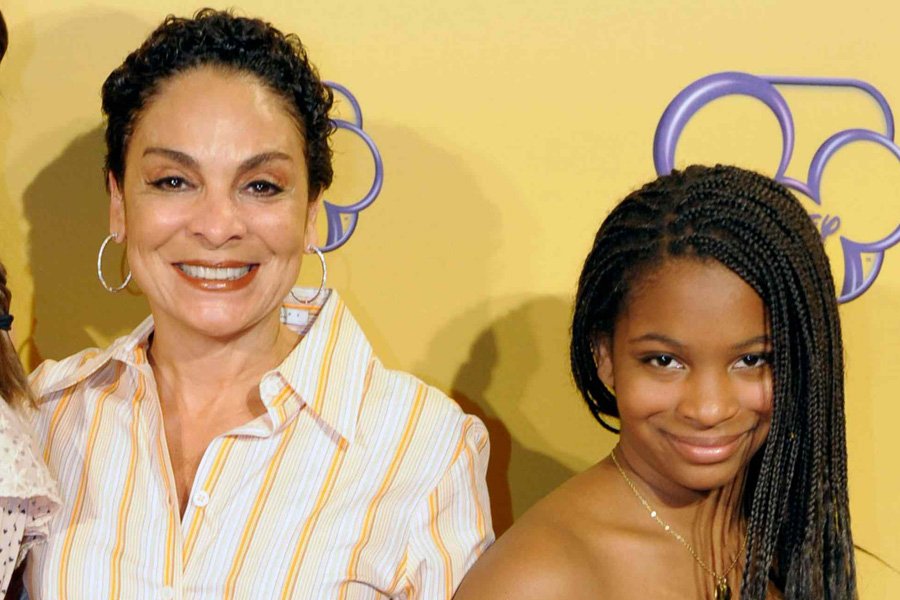
A name shaped by inheritance, but not confined by it
I think Imani Duckett is most interesting when I stop reading her as someone who merely appears in the shadow of a famous parent. That frame is too small. It flattens her into biography trivia, when her actual story feels more like a studio wall covered in sketches, script pages, and half-finished ideas. She is not just a daughter, an actress, or an artist. She is someone building a language of her own, one careful layer at a time.
What stands out to me first is the blend of discipline and restraint around her public life. In an age when many young creatives turn every stage of life into a performance, Imani Duckett seems to move differently. Her presence is measured. She does not flood the room. She enters it with intention. That choice matters. It suggests a person who understands that mystery can be part of an artistic practice, not an obstacle to it.
The value of growing up near art without being swallowed by it
I am drawn to artists who grow up near creativity but do not simply inherit it as a costume. For Imani Duckett, art appears to have been part of the air from the start, but she seems to have treated that environment as a starting point rather than an identity ready-made. That distinction is important. Some people inherit visibility. Others inherit the tools to make something real out of it.
Her path suggests that she learned to move between worlds. One world is public and shaped by recognition. The other is private, patient, and craft-based. In the second world, a brushstroke matters. A line reading matters. A rough draft matters. The work becomes less about being seen and more about seeing clearly. That kind of training often produces artists with a stronger center, because they are not merely responding to attention. They are answering a deeper call.
I also think there is something powerful in the fact that her creative identity is not limited to one medium. Acting, writing, visual art, and modeling each require a different kind of self. Acting asks for transformation. Visual art asks for composition. Writing asks for structure and voice. Modeling asks for presence and control of image. Moving across these forms can feel like walking through four different rooms in the same house. Not everyone can do it. Fewer still can do it without losing the thread.
Why multidisciplinary work matters now
I see Imani Duckett as part of a larger generation of artists who no longer accept narrow labels. The old template said pick one lane and stay there. But contemporary creativity often works more like a river delta. It splits, bends, and widens. That is not confusion. That is adaptation.
When an artist works across several forms, each form sharpens the others. Acting can deepen visual art by teaching timing and emotional rhythm. Visual art can sharpen acting by training the eye to read texture, silence, and composition. Writing can turn both into something more reflective, more deliberate. I suspect that this is part of what gives Imani Duckett’s creative profile its edge. It feels cross-trained. It feels alive.
Her visual work, especially, seems to carry a tension between delicacy and force. That combination is magnetic. I think of paper cutting as a metaphor for the whole process. It is precise, but it is also destructive in a controlled way. Something must be removed for the image to emerge. That feels like a fitting image for any serious artist: choosing what to cut away so the shape underneath can breathe.
The quiet discipline behind public restraint
There is a temptation to mistake privacy for passivity. I do not think that applies here. A low public profile can be an active decision, especially for a person whose name already attracts curiosity. Silence, in this case, reads less like absence and more like containment. It says the work is not finished being formed. It says some things belong in the studio before they belong online.
That matters because attention can be a hungry light. It warms, but it also burns. Artists who come from recognizable families often face a strange pressure to perform their own arrival before they have fully arrived. Imani Duckett seems to resist that pressure. She lets the work do the introducing. That is a quiet kind of confidence.
I also find her balance between visibility and control worth noting. She has enough public presence to be known, but not so much that the work gets buried under spectacle. In practical terms, that leaves room for a career to breathe. In artistic terms, it preserves tension. Tension is useful. It keeps the image from going flat.
Family, legacy, and the long echo of mentorship
Family stories often get told as if inheritance is the main event. I think the better question is how inheritance gets transformed. In Imani Duckett’s case, the family connection is clearly significant, but what seems more meaningful is the way that connection appears to function as support rather than script.
That kind of support can matter enormously. A young artist who grows up with encouragement, structure, and a visible example of creative work is often better positioned to take risks. The point is not simply access. The point is permission. Permission to try. Permission to fail. Permission to grow without being rushed into a final form.
I am especially interested in how legacy can create both opportunity and resistance. A famous family name opens doors, but it also invites comparison. An artist in that position has to decide whether to echo, diverge, or invent a third path entirely. Imani Duckett seems to favor the third path. She does not look like she is trying to compete with the past. She looks like she is building a room next to it.
What her work suggests about the future
When I look at the shape of Imani Duckett’s story, I see someone whose future may unfold in several directions at once. She could continue in stage and screen work. She could deepen her visual art practice. She could move further into writing or production. She could even become one of those rare artists whose body of work matters as much for its range as for any single breakout moment.
What I find compelling is that her trajectory seems to be driven by process rather than noise. That is often a slower road, but it can be a stronger one. Process gives an artist a backbone. It allows the work to mature in public without becoming public property too early.
There is also a symbolic power in the themes associated with her art. Identity, vulnerability, strength, and Black interior life are not decorative topics. They are load-bearing beams. They hold weight. They ask for honesty. They ask for care. When an artist returns to those themes across mediums, the work can start to resemble a conversation with oneself, ongoing and unfinished. That unfinished quality is not a flaw. It is where growth lives.
FAQ
Who is Imani Duckett?
Imani Duckett is a multidisciplinary artist known for work in acting, visual art, writing, and modeling. I see her as a creative who moves carefully across mediums rather than staying confined to one identity.
What makes Imani Duckett different from many other young public figures?
What separates her, in my view, is her restraint. She does not rely on constant exposure. She seems more interested in making work that has substance than in filling every moment with visibility.
Why does her art attract attention?
Her work draws interest because it appears to sit at the intersection of identity, emotion, and visual storytelling. I think people respond to that combination because it feels personal without becoming simple.
Is Imani Duckett only known because of her family?
No. Her family background explains part of her public recognition, but it does not fully explain her creative direction. Her multidisciplinary work gives her a separate artistic presence that stands on its own terms.
What does her career path suggest about her future?
It suggests flexibility, patience, and range. I think she may continue to build a career that does not depend on one label, one medium, or one public image.
How Massachusetts Drivers Can Stay Ahead Of Vehicle Repossession
Small Gold Holdings With Big Investment Lessons
How Commercial Foundations Keep Buildings Standing Tall
Keeping Household Finances Afloat During Probate
How Smart Water Management Helps Concrete Outlast The Weather