Takeaways
Dawn Robinson helped define En Vogue’s vocal sound and later worked in other group and solo settings. Her path shows how a recognizable voice moves between a group identity and individual artistic choices. The changes in her career offer a way to hear the difference between ensemble work and artistic independence.
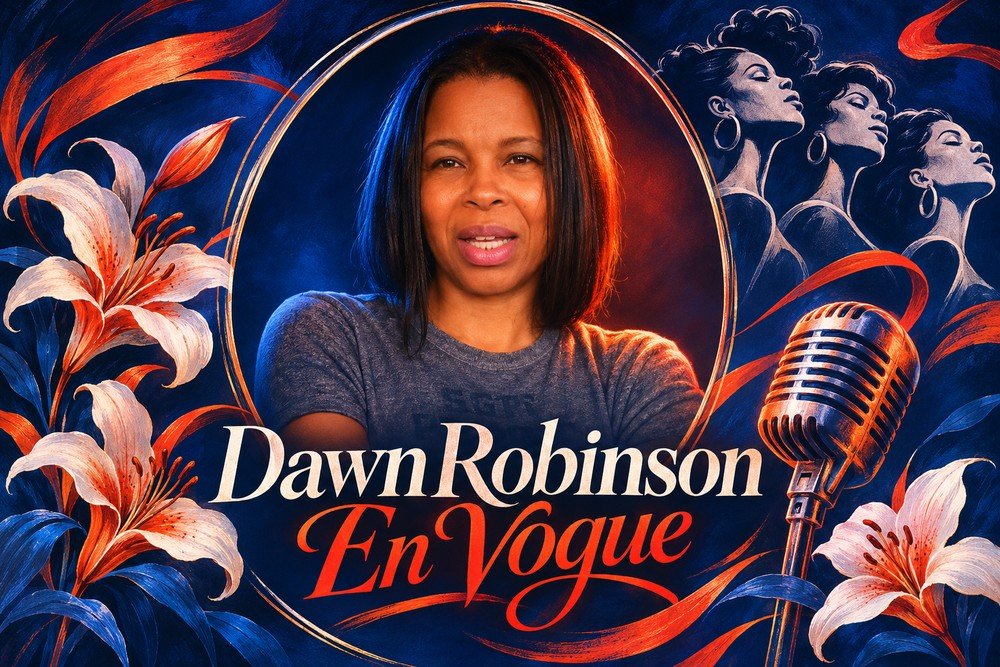
Dawn Robinson’s career traces a path through group success, solo work, collaboration, and difficult decisions about independence. As one of En Vogue’s founding vocalists, she helped shape the sound of a group that became a defining presence in R&B and pop during the early 1990s. Her story is not only about hit records; it is also about the choices artists face when group identity, contracts, and individual ambitions meet.
The Dawn Robinson: En Vogue’s Voice and a Career of Reinvention profile places Robinson’s birth in New London, Connecticut, on November 24, 1966, and describes her as the eldest of three children. Music was part of her childhood: she sang in church and began recording young. Her family later moved to California, where she attended school and worked before her audition for the Oakland group taking shape under producers Denzil Foster and Thomas McElroy.
In 1989, Robinson joined Terry Ellis, Cindy Herron, and Maxine Jones to form En Vogue. Their vocal blend and carefully styled performances stood out in a competitive era. Songs such as “Hold On,” “My Lovin’ (You’re Never Gonna Get It),” and “Free Your Mind” showed the quartet’s range, while the group’s visual presentation made them a major presence in music video and live performance. Robinson’s distinctive voice was one part of a coordinated ensemble.
En Vogue’s success brought the usual pressures of a high-profile group: intensive schedules, business agreements, public expectations, and the challenge of dividing creative and financial control. Robinson left the group in the mid-1990s, after disputes over management and contract terms as described in interviews and profiles. No single summary can capture every perspective. What can be said is that the departure changed the group and Robinson’s own path, while leaving the underlying questions about artist autonomy highly relevant.
Robinson later collaborated with Raphael Saadiq and Ali Shaheed Muhammad in Lucy Pearl, a project that gave her a different musical setting. She also released solo work and pursued acting and television appearances. These chapters show an artist experimenting with formats beyond the original group, rather than simply stepping away from music. A career can continue to develop even when its most famous chapter remains the first thing audiences remember.
Her personal life has also drawn attention, including her marriage to Andre “Dre” Allen, which ended in divorce. Robinson has spoken publicly about family relationships, hardship, and periods of housing insecurity. Those disclosures should be treated with care: a person describing a difficult period does not make every detail of their private life fair game. Her own words provide context, while speculation and sensational retellings can strip away agency.
Robinson’s story also includes family complexity. She has spoken about her mother, Barbara, and their relationship at different points in life. Public accounts mention a sister and other family members, but not every relative has chosen public visibility. It is possible to recognize that family relationships shaped her experience without reducing them to a simple conflict narrative or exposing private details of others.
En Vogue has continued through changing lineups, tours, and occasional reunions. Robinson’s relationship with the group has likewise shifted over time, and interviews may reflect different moments rather than one final verdict. Reunion possibilities are contingent; reporting that a door is open does not establish that a return will happen. The best account distinguishes what has occurred from what someone hopes or predicts.
The band’s official En Vogue site offers a primary reference for the group’s public presence and current work. It complements the personal story by placing Robinson’s work within a collective achievement. Her legacy rests both in the sound she helped create and in the effort to shape a career after leaving the ensemble that first brought her to a wide audience.