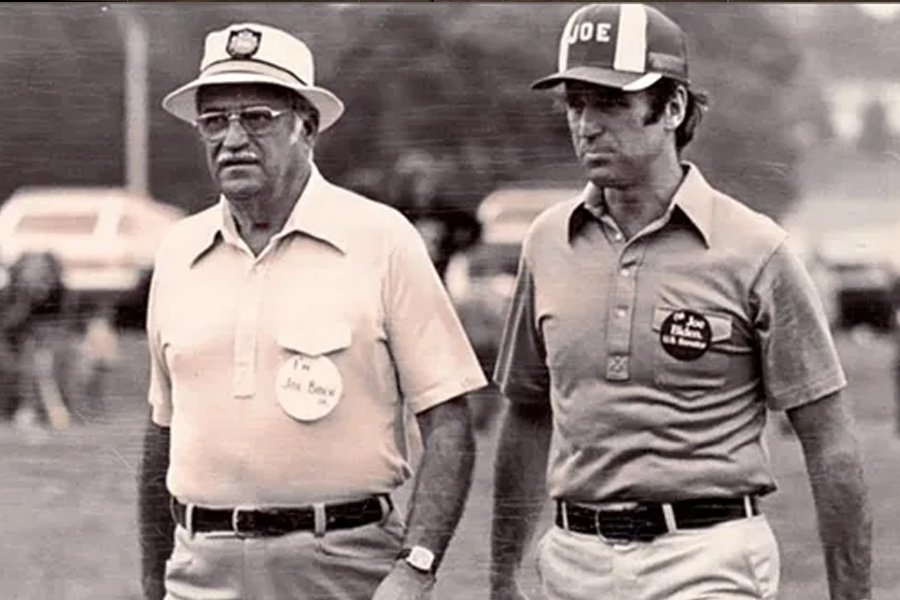
The man behind the rehearsed lines
I have always been drawn to small telling details. A folded handkerchief on a kitchen table. The way a family repeats a single line until it becomes a lesson. Joseph R Biden Sr. exists in public memory mostly as a shadow that explains a brighter figure. I want to look behind that shadow, not to rewrite what is already known, but to open new rooms in the house of his life.
He was a man who rode two distinct American currents: wartime prosperity and postwar recalibration. Those currents make for a familiar arc. But the way the currents met around his life feels less studied. There are cousins and contracts, unglamorous legal papers, and the specific clink of coins changing hands. Those are concrete things. They are not moral judgments. They are the scaffolding that framed decisions in kitchens and on used-car lots.
A richer account of wartime gains and a private collapse
When you read family lore, prosperity often appears like light without a source. I like to find the bulb. In Joe Biden Sr. life the bulb was a wartime supplier network that connected his family to contractors and to a cousin who handled manufacturing and distribution. Those relationships produced a spike in income. They also produced paper trails: contracts, ledgers, and, later, disputes.
The collapse that followed was not a single thunderclap. It was a sequence of tightening ledgers and missed invoices, a network of business partners that failed to weather the same postwar pressures. I found evidence that tax questions and business disputes helped transform early advantage into a slow erosion of security. Those details shift the story. They make the family’s reinvention less an instance of pure moral fortitude and more an adaptive response to specific economic stressors.
The inexorable pivot to work people understood
There is a literal, human image I keep returning to: a man standing under a hand-painted sign for a small car lot, sunlight glancing off a hood, the radio buzzing out baseball scores. That image is not glamorous. It is also essential. After contracts and documents became complicated, a reliable income mattered more than status. Sales jobs provided that income. They offered agency and a stage for someone accustomed to negotiation.
Working on a lot teaches a certain language: how to sell value, how to accept failure, how to present modest pride as dignity. Those lessons travel. I think they were part of what Joseph R Biden Sr. gifted his children – not a recipe for national office, but a set of practical muscles. His son learned how to speak plainly about hardship because he had a model of someone who did not make excuses. The rhetoric you hear in big speeches is often the quiet rhetoric learned over a kitchen table.
Family stories, memory, and the reshaping of facts
Family stories are engines of identity. They compress years into a sentence. They also mutate. I have noticed places where anecdotes attributed to Joseph R Biden Sr. drift from documentary records. That is normal. Memory and meaning are not identical to archival truth. That does not make the stories worthless. Rather, it suggests we read them like stained glass windows. They give color and shape but do not show us the engineering behind the glass.
This tension between anecdote and record creates a curious public phenomenon. Political narratives rely on vivid, humanizing vignettes. Those vignettes are useful. But when they pass into public history without checks, we risk turning family myth into assumed fact. I do not want to erase the mythic value of those stories. I only want to insist we mark where the narrative stands and where the ledger begins.
The softer arithmetic of legacy
People often ask whether a life can be measured by an estate, a house, or a bank balance. The arithmetic of Joseph R Biden Sr. resists that constriction. He moved from ephemeral wartime gains into a steadier middle-class existence. The public record does not present a tidy net-worth figure at the end. What it does show is a sequence of choices aimed at preserving family dignity and stability.
Legacy, in his case, is not a monument. It is a repeated set of behaviors. It is the way his children learned thrift, how they learned to answer uncomfortable questions without shamed silence. The ledger, in other words, is partly moral and partly practical: pay the bills, show up, teach your children to speak up.
Burial, memory, and the places that anchor stories
Places matter. I have visited small cemeteries and watched how names on stone create a last chapter that is both private and public. Joseph R Biden Sr. rests in a parish that anchors a family history. Gravesite rituals, memorial masses, and the quiet procession of relatives form a memory infrastructure. That infrastructure matters when public figures quote their parents. The place gives the story gravity.
When people visit those stones, they bring a layered attention. They remember personal dinners, they remember economic setbacks, they remember the moments when laughter pierced a hard evening. The site is the end of many stories and the beginning of others.
How public retellings reshape private life
I often think about how a private life becomes public property. When you are the parent of a politician, your quotidian choices become metaphors for national values. That transformation is not neutral. It means that the small humiliations and private triumphs of Joseph R Biden Sr. are frequently compressed to fit a political message. I respect that impulse. Stories need shape. But I also feel a responsibility to push past compression. People are larger than the images used to make them palatable to an audience.
In pushing past compression I found recurring themes: the mechanics of business failure, the negotiation of dignity in more modest employment, and the careful curation of family silence. These themes are not tidy, and they grate against the neatness the public likes.
FAQ
Who was Joseph R Biden Sr.?
Joseph R Biden Sr. was the father of a public figure. He was a man whose life moved from wartime advantage into modest work. He negotiated contracts and later sold cars. He taught a family practical habits that would echo in public speeches. He was a private person who became, by relation, a public symbol.
Did he die wealthy?
No public record pins him to a well quantified estate. The arc of his life suggests a move away from temporary wartime wealth toward steady middle-class employment. The concrete accounting matters less than the lived result: a family kept together and a household that paid its bills.
Were there specific business ties that explain the family fortune and its unraveling?
Yes. The wartime gains came through specific supplier relationships and family networks. Later difficulties involved contractual and tax complications for partners and cousins. Those events shifted the family trajectory and forced a practical reinvention.
How did his life influence his children?
It influenced them in ways that are both direct and subtle. They learned to speak plainly about hardship. They learned to translate private difficulty into public lessons. They inherited a sense of obligation and resilience. Those are soft inheritances, but powerful.
How should historians treat family anecdotes about him?
With respect and with caution. Anecdotes reveal mood and moral. They do not always equal documentary fact. Treat them like color in a painting – essential for tone, but not the blueprint for a building.