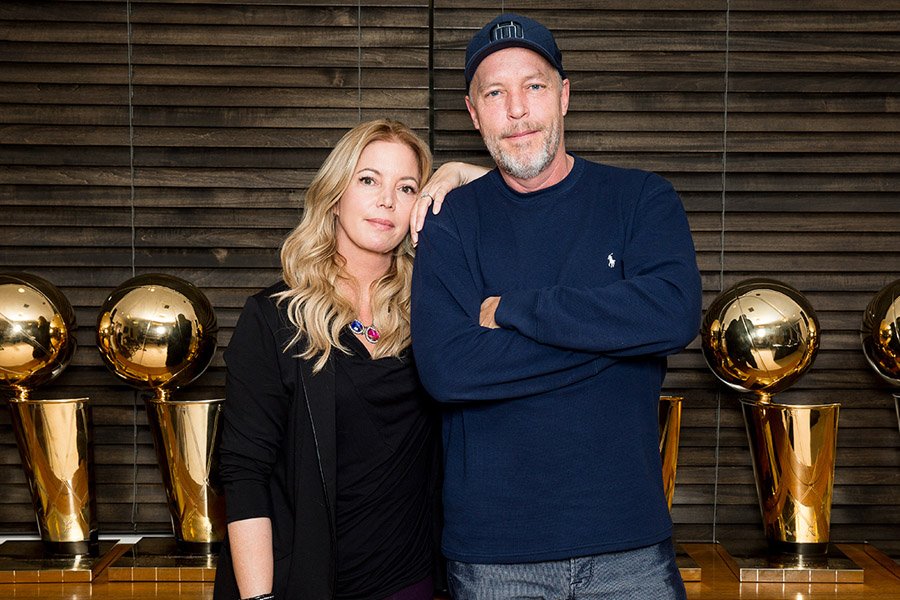
A different kind of spotlight
I have always been fascinated by the people who make big institutions feel small. They are the hands that tie the curtain, the quiet stage managers who ensure that the story moves without snagging. Janie Buss occupies that space. Her name rarely headlines box scores or trade rumors, yet her work shapes the parts of the Lakers story that live in neighborhoods and school gyms. Writing about her, I find myself drawn to the texture of public life that is not spectacle but scaffolding.
Family as a theater of stewardship
The Buss family reads like a long-running play. There are protagonists, antagonists, and a chorus that occasionally swells into full-throated debate. But teams and families are not identical. In family-run enterprises, trust documents, board seats, and personal loyalties serve as stage directions. Janie is part of a cast that has weathered governance disputes and public scrutiny. Those moments reveal more about the nature of stewardship than headline drama ever will.
I think of family governance as choreography. It demands rehearsal, agreed cues, and the ability to improvise when someone misses a mark. Janie’s role within that choreography has been different from those who trade in headlines. Her commitments lie in the rehearsals that happen backstage: charity events, youth initiatives, operational details that rarely get applause but make performances possible.
The mechanics of charity work
Charitable operations are where strategy meets compassion. They require project planning, vendor negotiation, volunteer management, and an endless attention to small details. I have attended many benefit dinners and community events. From my vantage point, the individuals who excel are those who treat each logistical hiccup as an opportunity rather than a problem. Janie’s repeated appearances in nonprofit leadership roles suggest a long attention span for these operational complexities.
When a foundation runs smoothly, it is tempting to assume it always has. But smoothness is often the product of thousands of tiny decisions. Allocating a donation so it reaches the right classroom, designing a mentorship program that fits with local needs, or deciding when to prioritize visibility versus impact are all judgment calls. Those judgments are where reputations are quietly won.
Monetary headlines and private math
There is a habit among observers to translate public transactions into personal net worths. I resist that habit unless the evidence supports it. The sale of a major asset, or a change in family ownership, creates liquidity. It does not create a transparent ledger of who owns what, how trusts are structured, or how proceeds will be divided. These are private arrangements, often governed by legal documents designed to protect long term goals. For someone like Janie, who has a low public profile, a headline that focuses on a franchise valuation tells us more about aggregate wealth than about her personal finances.
I try to remember that money in family enterprises behaves differently than personal bank accounts. It is allocated according to histories, promises, fiduciary duties, and sometimes legal constraints. The story worth telling then is not the guessing of numbers but the translation of liquidity events into possible futures for community programs and philanthropic commitments.
When governance becomes narrative
Family disputes about trust arrangements and board control are not just legal fights. They are narrative battles about legacy and intent. I have watched how certain phrases get repeated in the press and then ossify into conventional wisdom. That is dangerous. A single turn of phrase can simplify a complex web of motivations into a headline-friendly plot.
I believe Janie’s presence during governance confrontations should be read through the lens of institutional memory. Trustees, family members, and nonprofit leaders often act with a long horizon in mind. Their interventions usually reflect concerns about preserving donor intent, protecting program continuity, or safeguarding a mission beyond a single generation. These are mundane, slow-moving considerations. They do not make for dramatic cable TV. They do make for resilient institutions.
The invisible returns of community investment
There is a return on charitable work that never appears in balance sheets. It is the measure of a child who stayed in school because of a funded program. It is the parent who was able to feed their family because of a holiday drive. These are intangible benefits. They are also the most durable. In my view, a family legacy that invests in civic ties leaves more long-term value in a city than any single contract.
I want to emphasize something I do not often hear in business profiles. Philanthropy managed from within a sports franchise can create an ecosystem. Stadiums, youth programs, business partnerships, and sponsorships can combine into an infrastructure that supports small nonprofits and grassroots efforts. That requires people who can translate resources into relationships. In the machinery of that translation, people like Janie are not only administrators. They are translators between capital and community.
Public presence, privacy, and the choice to step back
Public life comes with noise. Not everyone within a public family chooses to amplify that noise. Privacy can be a strategy, not just a temperament. Maintaining a lower profile allows attention to flow to programs instead of personalities. It can make collaborations easier. It can also complicate public understanding of impact. If someone prefers to measure their life by program outcomes instead of social impressions, they will be underrepresented in celebrity narratives.
I find that paradox interesting. Fame attracts resources. Yet resources are most effective when they are deployed thoughtfully, rather than spent to extend a brand. The quiet sibling who prioritizes outcomes over headlines may be doing the most durable work, even if we notice them the least.
FAQ
Who is Janie Buss?
Janie Buss is a member of the Buss family and a public figure most often associated with the charitable and community arms linked to the Lakers. In public materials she is sometimes referenced by a married name. Her public footprint emphasizes nonprofit leadership and event stewardship rather than front-office decision making.
What kind of work does she do for community programs?
She is involved in organizing events, supporting youth foundations, and participating in nonprofit governance. That work includes logistics, program development, stakeholder coordination, and ensuring donations are translated into tangible services for local communities.
Was she involved in family governance disputes?
Yes. She has been named among family members in governance discussions and trustee actions that surfaced publicly. Those moments are best understood as part of the family’s broader stewardship and trust management issues.
Does public reporting reveal her personal net worth?
No reliable public estimate isolates her personal net worth. Coverage that discusses franchise valuations or family stakes does not equate to verified personal balance sheets for individual family members.
Why does her lower public profile matter?
A lower profile can be intentional. It allows focus on programmatic impact instead of personal branding. While that means less media attention, it can also mean more energy directed toward the work itself.
How should we interpret recent ownership transactions in relation to her role?
Major ownership transactions change the family’s financial landscape as a whole. They do not, by themselves, disclose personal distributions or trust details. The more useful lens is to consider how such transactions affect the funding environment for community programs and whether institutional commitments to philanthropy remain in place.